• Skip to primary navigation
  • Skip to main content
  • Skip to primary sidebar
  • Skip to footer

Dubiln Packard

  • Home
  • About
  • Foreclosure
  • Contact

Todd Murphy

February 4, 2015 by Todd Murphy

What permits do I need for a residential solar installation in New Jersey?

residential solar ground mount


I get a lot of questions from people thinking about installing a solar energy system in their home here in New Jersey.  Usually, your solar contractor will take care of this for you but from time to time I have seen smaller solar companies ask the home owner to take on that responsibility.

This applies to whether you are leasing or purchasing the system.

  • In order to get SRECs, there is an application to the State of New Jersey Clean Energy program. This is usually done by the installer. You can learn more about this from the program brochure here.
  • Your utility has an application and a follow-up as-built verification and sometime inspection. This is how you take advantage of net metering.  Here is a link to a solar FAQ at First Energy.
  • You will need a construction permit from your local municipality building department.  A fee is required and inspectors will come out to inspect the project along the way.
  • Some towns require a zoning permit even if your installation is on the roof.  A simple plot plan will have to be submitted showing where the system will be installed and the size of it.
  • For ground mount systems, zoning is required even if the system confirms to all of the usual requirements for an accessory structure.
  • In the case of a non-conforming installation (i.e. less than the required distance from the rear property line or side property lien) a variance application will be required along with a site plan showing all of the relevant data for the system installation and the zoning issues.  This may require the assistance of a lawyer.
  • Once the system is completed and inspected by the local municipality, an as-built drawing and application must be submitted to the utility and then to the State of NJ for final approvals.

Generally, this is a straight forward process but, as you can see, there is a fair amount of paperwork involved in getting your system installed and then approved for operation after installation.



Filed Under: solar energy permitting Tagged With: nj clean energy, solar energy, solar permitting

November 3, 2014 by Todd Murphy

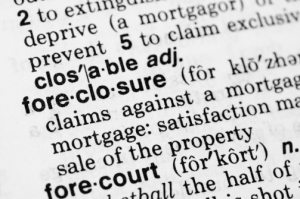
Foreclosure Terms and Definitions

foreclosure terms and definitions

Commonly Use Foreclosure Terms

Adjourn or Adjournment. To put off a court session, such as a hearing or trial, until a later time.


Amortization.  The process of paying off the loan, such as a mortgage, gradually, usually by periodic payments of principal and interest.


Answer. A document filed by the defendant in response to the complaint filed by the plaintiff. The answer admits to the statements in plaintiffs complaint that are true and denies the statements that are false. An answer may also include a counterclaim. In answer may also include defenses.


Answer to counterclaim. The document filed by the plaintiff in response to the defendant’s counterclaim.


Appraisal. A report prepared by a licensed appraiser that establishes the current market value of the property by comparing it to similar properties that have been sold recently.  An appraisal is often required by courts to establish value.


Arrears. A legal term for a type of debt which is overdue after missing an expected payment. It is also used for payments that occur at the end of a period. Arrears  are often added to the principal in a loan modification.


Bankruptcy.  A Federal law which protects creditors from creditors and allows the debtor to use the courts to either discharge debts or to make an affordable repayment plan.  Bankruptcy is usually used to stop a foreclosure and/or make repayments arrangements when a loan modification has been denied.


Collateral. The borrowers asset that is forfeited to the lender if the borrower is unable to pay alone. In a home loan, the property is the collateral. If the borrower does not pay the debt, the lender can bring a foreclosure case in court in the property may be sold to satisfy the debt.


Competitive Market Analysis (CMA). A report prepared by a Realtor that establishes the current market value of a property by comparing it to similar properties that have been sold recently. A CMA is less authoritative than an appraisal prepared by a licensed appraiser but can be equally useful.


Complaint. The document that begins a lawsuit in the civil division of the New Jersey Superior Court. The complaint must set forth claims that give the party being sued a general idea about what is being sued for. The party who files the complaint is known as the plaintiff. The party who is being sued is known as the defendant.


Consolidate debt. To replace multiple loans with a single loan, which often has a lower monthly payment and a longer repayment period. Also called a consolidation loan.


Cure (or to cure). To pay the amount that you owe and reinstate mortgage on the property. The amount you owe is usually the amount of the missed payments and any property taxes paid by the lender on your behalf.


Counterclaim. A complaint filed by the defendant against the plaintiff as part of the defendants response to the plaintiff’s complaint. Usually filed with the defendant’s answer.


Defendant. The parties sued by the plaintiff in a civil lawsuit for by the state in a criminal lawsuit.


Defense. The defendant stated reason why the plaintiff has no valid case.


Equity. the amount of money left over after you subtract the amount owed to others (such as to mortgage lenders and judgment holders) from the property value.


Escrow. Money in escrow is money placed into an account held by a lender into which the homeowner puts money so that the lender can pay for taxes and insurance.


Foreclose/Foreclosure.  The process by which a home loan lender proceeds in the Court to prove that the borrower is in default and to force the sale of the property to satisfy the loan made to the borrower.


Hearing. A public proceeding in a court in which witnesses are heard, evidence is presented, and the parties to the lawsuit are present and have a right to be heard. Is proceeding is formal, but somewhat less formal than a trial.


Interests. The cost of the money borrowed from a lender. Usually expressed in a percentage of the amount borrowed.


Judgment. The court order that represents the courts written decision in the lawsuit. A judgment should be signed and dated on the date that the case is decided.


Market value. The price or amount that your property can be sold for today.


Mediation. The act of attempting to resolve the dispute with the help of a neutral third party before a trial or hearing.


Mortgage. Homeowners refer to the money they borrowed to purchase their property as a mortgage. Lawyers use the work mortgage to mean the document that is recorded in the public record to reflect the fact that your home loan lender has a lien on the property until the loan is paid in full.  Without a valid mortgage filed against the property, a lender cannot foreclose.


Mortgage Service.  The company who you are making mortgage payments to.


Motion. The formal name for an application to the court for some kind of legal relief. Motions are usually filed after an order has been entered in a lawsuit, although sometimes they can be filed at the beginning of a lawsuit in place of an answer to a complaint or with an answer to a complaint.


Negotiate. To communicate with another party for the purpose of reaching an understanding or informally resolving issues.


Notice. The word for the legal notification required by law or in agreements.


Note. A legal document that is a written promise by one party to repay a loan or other sum of money to another party at a specific rate of interest during a specific period of time.


Order. The courts written decision in a lawsuit, signed and dated on the date that the case is decided. See also judgment.


Plaintiff. The party who begins a lawsuit by filing a complaint.


Qualified written request. A written request for mortgage documents made to the company collecting mortgage payments from you.


Real estate closing. The formal act and the last step in the process of transferring ownership of real estate property from seller to buyer. The word closing is also used to describe the formal act of signing all documents for a loan. These two acts typically occur on the same day.


Reinstatement. To reinstate the mortgage and stop the foreclosure proceeding, the homeowner must pay the lender the total amount past-due, plus interest, attorney’s fees, and any other costs incurred by the lender in connection with the foreclosure proceedings.


Rescind. To unmake or undo a contract between two parties.


Rescission. The active unmaking of a contract between parties (the undoing of a transaction).


Redeem/Redemption. The statutory right of the defaulting mortgager to recover property, within a specific period of time after foreclosure or tax sale, by paying the outstanding debt or charges. The purpose is to avoid selling property for less than its value.


Refinance. The process of paying off one loan with the proceeds from another loan, using the same property as security.


Rider. An amendment addition or change to a contract or policy.


Security interest. A property interest created by agreement or by law. Usually, this type of interest is created in order to make certain that the person responsible for repaying the debt actually repays the debt.


Servicer (Loan or Mortgage Servicer). See mortgage servicer above.


Service of process. The legal term for the act of delivering to or leaving with the person who is a party to a lawsuit, a summons or writ, or other official court paper, which gives that party notice of the fact that someone has filed a lawsuit against him or her.


Sheriff. In New Jersey, an officer of the court who employs his officers perform official duties, such as providing security to the courthouse, serving process (court papers) on litigants, and enforcing court judgments, such as writs of execution. Sometimes referred to, especially in other states, as a constable.


Standing. A party’s legal right to bring a legal claim were to seek a court’s enforcement of a right or duty.


Stay. Postponement or halting of a court proceeding.


Summons. The official notice to the defendant that someone has filed a lawsuit against him or her. It also tells the defendant where and how he or she must respond to the complaint and how long he or she has to respond.


Term. The number of months or years of repayment in a loan agreement (note).


Third-party complaint. A complaint filed by defendant against the third-party claiming that the third party is responsible for some or all of the damages the plaintiff to try and recover from the defendant.


Trial. A public proceeding in which witnesses may testify, evidence may be presented, and the parties to the lawsuit have a right to testify. In addition, a jury may be present at a trial. The trial is usually more formal than a hearing.


Unconscionable commercial practices. The term unconscionable means literally without conscience, or showing no regard for conscience, sense of decency, or justice. Commercial practices refer to the sale and distribution of goods and the financing of credit transactions on the goods sold. Also referred to as predatory lending practices.


Utilities. This term refers to services such as natural gas, electricity, water, and telecommunications and Cablevision.


Writ of execution. A court order directing a sheriff or other officer to enforce a judgment, usually by seizing the judgment debtor’s property. In the case of a foreclosure action, the judgment debtor is the homeowner and the property is the home.


Hopefully these definitions of word used in foreclosure actions will help you understand the language your lawyer, the court, and your loan servicer use when discussing your case.


Filed Under: Foreclosure

October 20, 2014 by Todd Murphy

5 Tips to Choosing the Best Foreclosure Lawyer in New Jersey

Searching for the Best Foreclosure Lawyer in NJ?

Here are 5 tips to choosing the best foreclosure lawyer for your situation.

best foreclosure lawyer nj


  • A Focus on Foreclosure: Be sure your lawyer is well-versed in loan modifications and bankruptcy law – specifically chapter 13 cases. The loan modification is the primary tool your lawyer should be focusing on. Chapter 13 bankruptcy, sometimes used in conjunction with a loan modification, is one of a handful of tools that are often used to save a home from foreclosure and get a loan modification when others not obtainable. A chapter 13 bankruptcy case is much more complex than a typical no-asset chapter 7 “Fresh Start” case.
  • Experience: Be sure your lawyer has been handling foreclosure cases at least since 2008 when the current foreclosure crisis hit. Handling foreclosure cases regularly and for at least 5 years will ensure your lawyer knows the latest changes in the law and will understand the various strategies that are available to save your home from foreclosure.
  • Bankruptcy Knowledge is Not Enough: Be sure your lawyer is not just a bankruptcy lawyer who will only offer you the option of bankruptcy. Bankruptcy is not the only way to save a home from foreclosure and all options should be explored fully – with loan modification being the first of those possible solutions to explore.
  • Beware of Scams: Beware of lawyers, usually from out-of-state, that want to charge you a large initial retainer of $2,000-$3,000, with a monthly retainer of $500-$700 while they negotiate a loan modification for you.  Many times, this is a scam.
  • Loan Modification Expertise: It is crucial that your lawyer understands the importance of loan modification as the primary tool for saving a home from foreclosure. Loan modification solves the root of the issue, and should be your strategy if you qualify for one. Bankruptcy should only be a backup or secondary tool. Consider these tips carefully when you are looking for the Best Foreclosure Lawyer for your situation.


Todd Murphy dedicates his practice to saving peoples’ homes from foreclosure with offices in Bedminster (near Somerville) NJ. 


Wondering What You Should Ask A Foreclosure Lawyer Once You Get One On The Phone?

Ask the right questions: avoid scams!

It can be difficult to know what questions to ask your foreclosure lawyer to make sure that he/she is well-qualified for the task of saving your home from foreclosure. We have the top 5 questions you need to ask a foreclosure lawyer to make sure that he/she is right for the job, and to make sure you are not being scammed.

Click the button below to get your 5 questions to ask your foreclosure lawyer before you hire them.


Get My Questions


Filed Under: About, Foreclosure Tagged With: Bridgewater NJ, foreclosure, foreclosure lawyer, nj, somerville NJ

October 20, 2014 by Todd Murphy

5 Tips to Choosing the Best Bankruptcy Lawyer in NJ

New Jersey Has Many Good Bankruptcy Lawyers.  How do you choose the Best Bankruptcy Lawyer?  Here are 5 tips.

Best Bankruptcy Lawyer NJ

  • Be sure your bankruptcy lawyer practices bankruptcy law primary if not exclusively. Bankruptcy law can be complex with many nuances. A good bankruptcy lawyer might handle 10 or 20 cases each month. Over five years, that can be about 1000 cases. A lawyer who dedicates most or all of his or her practice to bankruptcy cases will naturally know how to get your case prepared and filed correctly and get you the result you want.
  • Make sure your lawyer spends time with you interviewing you and asking specific and detailed questions about your financial situation and explains the law and process in detail before he or she recommends bankruptcy and specifically the type of bankruptcy that is right for your situation.
  • Beware of low-priced bankruptcy lawyers. Bankruptcy, when done correctly, requires a very careful analysis of a vast amount of detailed financial information. Therefore, it is very time consuming. A low-priced lawyer may be a sign your lawyer is going to cut corners on your case.
  • Ask for a written fee agreement and be sure there are no hidden charges. Also, be sure your lawyer is handling your entire case for the quoted fee not just preparing the petition then charging you extra for parts of the case that other lawyers include in their fee.
  • Your lawyer’s experience can make all of the difference. Be sure your lawyer has at least 5 years of experience primarily practicing bankruptcy law.

Todd Murphy is a foreclosure, collection defense, and bankruptcy lawyer with offices in Bedminster (near Somerville) NJ.

Filed Under: About, Bankruptcy FAQ Tagged With: bankruptcy, Bankruptcy Lawyer, Bridgewater NJ, nj bankruptcy lawyer, somerville NJ

October 17, 2014 by Todd Murphy

Stop Collections

#Stop_Collection #FDCPAWe can stop collection activity NOW, including

  • garnishment

  • liens

  • creditor harassment

  • phone calls

  • emails

  • collection agency threats

  • foreclosure action

  • frozen bank accounts

  • repossession.

The law protects you from disaster, homelessness and imprisonment, giving you time to restructure your debts and work out payment arrangements.

You cannot be thrown in jail for owing money.

We are a nation of second chances. The law is designed to protect you, preserve certain of your assets and keep you in your home while you work out your situation with your creditors, with the help of a lawyer.

As soon as creditors know that you’ve retained an attorney, they are required to stop contacting you and deal instead with your lawyer, who can deploy a wide range of resources on your behalf to help get your financial life back in order.

These resources include negotiation with creditors, restructuring loans or obtaining loan modifications, and possibly filing for bankruptcy to have debts discharged. If collectors persist after you’ve retained counsel, you may be entitled to compensation under the Fair Debt Collection Practices Act.

When you’re under financial duress, it can be difficult to see around the corner to a brighter day.

We understand your situation at Todd Murphy Law

It’s vital to take the first step, before things get worse.

Early action gets better results. Call our office now!

From our offices located in Bedminster, we serve all of Northern New Jersey, including Somerville.

[wpseo_address id=”1425″ oneline=”1″]

Filed Under: Collection Defense Tagged With: debt collection, fdcpa

« Previous Page
Next Page »

Primary Sidebar

(862) 305-4901

Search This Site

Footer

American Bankruptcy Institute Logo National Association of Consumer Advocates Logo
Avvo - Rate your Lawyer. Get Free Legal Advice.
Designated A Debt Relief Agency Under U.S.C. 528
( see required bankruptcy disclosures )
The materials available at this web site are for informational purposes only and not for the purpose of providing legal advice. You should contact your attorney to obtain advice with respect to any particular issue or problem. Use of and access to this Web site or any of the e-mail links contained within the site do not create an attorney-client relationship between Todd Murphy Law and the user or browser.
Lawyer J Murphy | Featured Attorney Foreclosure
(862) 217 2361