• Skip to primary navigation
  • Skip to main content
  • Skip to primary sidebar
  • Skip to footer

Dubiln Packard

  • Home
  • About
  • Foreclosure
  • Contact

New Jersey Fair Foreclosure Act

July 9, 2015 by Todd Murphy

New Jersey Fair Foreclosure Act

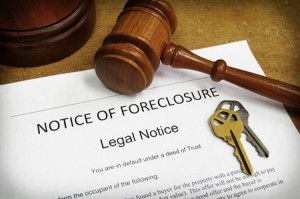
Fair Foreclosure ActNew Jersey Fair Foreclosure Act was adopted to provide homeowners with the ability to cure a defaulted mortgage.

Good Public Policy To Cure Defaults.

The Legislature, when enacting the Fair Foreclosure Act, found that it was good for New Jersey for homeowners to be given every opportunity to pay their home mortgages, and thus keep their homes; and that lenders will be benefited when residential mortgage borrowers cure their defaults and return defaulted residential mortgage loans to performing status.

The Act Applies to Residential Mortgages Only.

The Fair Foreclosure Act applies only to residential mortgage loans in which the property is owner-occupied and does not contain more than four units.  “Owner” can extend to the owner’s immediate family.

Notice of Intention To Foreclosure.

The first protection arises in the form of a Notice of Intent To Foreclosure which must be a written notice sent to the borrower 30 days prior to filing a Complaint and initiating a foreclosure action notifying the borrower that it has the right to cure and of the amount of the default and how to cure the default.

Statute of Limitations.

This provision has had much attention lately in a Bankruptcy Court case where Judge Kaplan found in In Re Washington that the date from which the statute of limitations is calculated in addition to what is stated in the Act can also be the date the entire loan was accelerated.  This typically occurs in the Complaint when it is filed which means the Complaint would have had to have been dismissed for some reason and then re-filed within six years from the date of the first Complaint (the acceleration date).  This may be a rare occurrence but may apply if your case was dismissed for lack of prosecution or due to the large settlement in 2012.

Otherwise, the statute of limitations runs six years from the date for the making of the last payment or the maturity date of the note. 36 years from the date of recording the mortgage and 20 years from the date which the borrower defaulted.

Curing Default.

This is the cornerstone of the Act and provides that at any time during the foreclosure action, up until the date of entry if final judgment, the borrower can cure the default.

Notice Prior to Entry of Final Judgment.

An additional notice notifying the borrower that it has the right to cure must be sent to the borrower 14 days prior to asking the court to enter final judgment.  The notice notifies the borrower that it has the right to cure and that if the borrower believes he or she can cure with 45 days, to notify the lender within 10 days of the notice.  If such a notice is sent to the lender, the lender cannot ask for final judgment until 46 days has past.

Reinstatement of Mortgage Relationship.

In the event the default is cured, the lender is required to restore the borrower to the same position it held proper to the default.  In other words, the borrower can continue to pay the mortgage payments under the terms that were in place on the day of default.

If Your Hone Is Abandoned.

The Act does provide some relief to lenders if the home is abandoned.  The time frames and additional notices can be avoided if the lender can show to the Court that the home is abandoned.

Foreclosure Time Frame.

The Fair Foreclosure Act, with the addition of the additional notices and protections creates and extended time-frame for residential foreclosure actions which at minimum are 169 days and at maximum 200 days.  This of course assumes the borrower is not represented by counsel and is allowing the case to proceed uncontested (either did not file an answer or filed an non-contesting answer).  It also assumes the lender does not delay in processing the case and that the Court is not backlogged.  Click this link for more detailed information on time frames for a residential foreclosure action in New Jersey.

Filed Under: Foreclosure Tagged With: fair foreclosure act, foreclosure, New Jersey

July 7, 2015 by Todd Murphy

Can I Defeat A Foreclosure Case Past The Statute of Limitations in New Jersey

statute of limitations for foreclosure complaint in new jerseyA Recent New Jersey Bankruptcy Court Case May Allow You To Defeat a Foreclosure Case If Your Complaint Was Filed More Than Six Years After Your Loan Balance Was Accelerated.

People Have Asked: “Can I Defeat A Foreclosure Case Past The Statute of Limitations?

THIS ARTICLE HAS NOW BEEN UPDATED WITH THE PASSING OF ASSEMBLY BILL 5001 as of February 2019.  See the updated article here: https://toddmurphylaw.com/new-jersey-revises-statute-of-limitations-on-foreclosures/

The New York Times posted an article in November of 2014 reporting on an interesting case in the New Jersey bankruptcy court where a judge – reluctantly – barred a foreclosure action because the complaint was filed beyond the statute of limitations under New Jersey’s Fair Foreclosure Act.  See NY Times Article Here.

Judge Kaplan in In Re Washington held that, “by application of N.J.S.A. § 2A:50-56.1(a) and (c), Specialized Loan Servicing was time-barred under New Jersey state law from enforcing either the note or the accelerated mortgage. As a result, Specialized Loan Servicing’s proof of claim was subject to disallowance under 11 U.S.C. § 502(b)(1) and deemed unenforceable against the debtor or the debtor’s property under applicable state law. As a result, the lender’s claim was unsecured, and the underlying lien was deemed void pursuant to 11 U.S.C. § 506(a)(1) and (d).”

What Does the New Jersey Fair Foreclosure Act Say About Statutes of Limitations?

The statute reads:

“1. An action to foreclose a residential mortgage shall not be commenced following the earliest of:

a. Six years from the date fixed for the making of the last payment or the maturity date set forth in the mortgage or the note, bond or other obligations secured by the mortgage, whether the date is itself set forth or may be calculated from information contained in the mortgage or note, bond, or other obligation, except that if the date fixed for the making of the last payment of the maturity date has been extended by a written instrument the action to foreclose shall not be commenced after six years from the extended date under the terms of the written instrument.  N.J.S.A. § 2A:50-56.1(a) (emphasis added).

What Happened in the Bankruptcy Court Case?

In a Bankruptcy Court Case title In Re Washington, The home owner purchase a three-family house in February 2007 with a 30-year adjustable rate Mortgage and Note. In July 2007 the borrower defaulted on the Note and the foreclosure action was filed by the Lender in December 2007. The foreclosure Complaint accelerated the due date for all amounts owed on the loan as a result of the payment default. In July 2013 the foreclosure action was dismissed for lack of prosecution due to the Lender’s failure to produce certain documents to the Court. The Lender did not appeal the decision or commence another foreclosure action against the homeowner. Then, on March 12, 2014 the borrower filed for Bankruptcy and commenced an Adversary Proceeding against the Lender to render the loan wholly unenforceable.

Citing the New Jersey Statute of Limitations, the borrower argued that the six-year statute of limitations applicable to loans as per the Fair Foreclosure Act (see N.J.S.A. § 2A:50-56.1) barred the Lender from commencing an action due to the borrower’s default on the note taking the position that the six-year statute of limitation period had expired due to the default and acceleration of the maturity date that occurred when the foreclosure complaint was filed in 2007. Judge Kaplan held that the six-year statute of limitation period applied to the foreclosure action and the Lender failed to commence a foreclosure action within the six year period following the accelerated maturity date that occurred back in June 2007. Therefore, the Lender’s lien was void and no longer enforceable against the Debtor. As a result, the Lender’s proof of claim in the Bankruptcy case was also barred due to the underlying lien being unenforceable as a result of the decision.

Acceleration Was The Key Here.

Because the loan was accelerated, the date of the last payment became the date of acceleration.  That date, in this case was December 2007.  Even though the lender filed a case within the time frame originally, the case was dismissed for lack of prosecution causing the lender to have to start from the beginning and in so doing, the Complaint was then filed outside the six year date.

How will this case hold up in New Jersey State Court?

Its worth a try.  This is still a recent case and the concept is only just beginning to be litigated in New Jersey State Court.  So, more will be know as those cases come down.  The NJ State Court is not required to follow the Bankuptcy Court case but can use it for guidance.  This particular set of facts doesn’t come up often since most lenders don’t wait so long to file a foreclosure action, but if your complaint has come more than 6 years after the lender declared you in default, then it is worth a try to raise this as a defense when you answer your complaint.

What You Should Do If You Are Served With a Foreclosure Complaint in New Jersey?

Don’t just ignore the Complaint.  You only have 35 days to file an answer.  As soon as you receive the Complaint, contact an experienced New Jersey foreclosure attorney who can review your situation and advise of the next steps.  If the date on the Complaint is six years after your loan balance was accelerated, look at this possibility carefully, review the latest State Court case law and determine whether or not this is a valid defense for you.

Can I Defeat A Foreclosure Case Past The Statute of Limitations in New Jersey?  Well, maybe!


*Update: The bankruptcy court case In Re Washington was overturned on appeal in August of 2015. The United States District Court for the district of New Jersey reversed its decision and now, the debtor does not get a free home, the mortgage must be paid by the mortgager.

If you want to learn more about saving your home from foreclosure, click on the button below to get your Free Consumer Guide To Foreclosure. 

Filed Under: Bankruptcy FAQ, Foreclosure Tagged With: bankruptcy court, fair foreclosure act, foreclosure, judge michael kaplan, New Jersey, ny times, statute of limitations

June 30, 2015 by Todd Murphy

Can I Strip A Second Mortgage In A Chapter 13 Bankruptcy?

second mortgage lien stippingIf there is no equity in your home after the first mortgage, you may be able to “Strip” a second mortgage lien and treat just like any other unsecured lien like a credit card and pay little or nothing on that debt.

Back in the hey-day of toxic mortgage lending 2005, 2006, and 2007, it was all-to-common to sell a homeowner two loans at once: a first mortgage loan and a second mortgage loan. Often, when combined, the total value of the loans was as much as or sometimes even greater than the value of the purchase price of the home. Of course today, those home values are not at all what they used to be and the homeowner is stuck with a pair of loans that exceeds the value of the home and may for many years to come.

The Second Mortgage Makes it Harder To Get A Loan Modification.

When in a foreclosure situation, the second loan coupled with the fact that the combined loan value far exceeds the home value, exacerbates the situation and makes it much more difficult to obtain a loan modification.  With this excessive debt couple to the property by the liens, lenders are reluctant to offer a loan modification. Lenders view the situation as one where the home owner is just going to default again after a loan modification due to the excessive debt on the property.

Things Change if The Second Mortgage Is Removed.

It becomes more attractive to a lender in making a decision to grant a loan modification if the second loan is eliminated.  Both from the point of view of eliminating a lien on the property but also freeing up cash flow for the homeowner and making it easier to pay the first mortgage loan once it is modified.

How Can The Second Mortgage Be eliminated?

In bankruptcy, although we talk about eliminating the second mortgage, what is really going on is that we are converting a secured debt to an unsecured debt.  This is known as “stripping” the lien.  When a debt is converted to unsecured, it is then treated just like a credit card debt or other unsecured debt and often very little or sometimes nothing is paid to that debt during the course of the chapter 13 repayment plan. When we strip a second mortgage, we remove the lien from the property and convert the loan to unsecured and pay little or nothing on that debt.

The Benefits of Stripping A Second Mortgage Lien.

Once the second lien is stripped, two thing happen: first, the monthly payment that was required to pay the second mortgage loan is now greatly reduced freeing up cash flow to pay the first mortgage which is the priority in saving the home.  The other benefit comes when the home is sold, the amount of money that is required to pay-off liens against the property is now reduced which may allow a home owner to sell a home when otherwise, she could not.

Consider the Benefit of Lien Stripping in a Chapter 13.

In considering whether or not to use a chapter 13 bankruptcy as a tool to resolve a foreclosure and obtain a loan modification when there is a second loan involved and the home is underwater as to the first loan, consider the benefits of the lien stripping when making your decisions.


Filed Under: Foreclosure

June 30, 2015 by Todd Murphy

Why Can’t I Get A Principal Reduction?

mortgage bank buildingPrincipal Reduction Is The Answer To Fixing The Foreclosure Crisis: Why Can’y I Get A Principal Reduction For My Home?

Principal reduction is the holy grail of loan modification: why is it so elusive? For years now, President Obama has been demanding that home loan lenders reduce principal for homes that are worth less than what is owed to the bank and, for the most part, the big banks have ignored him.

Referred to as “underwater,” loans that have a principal balance higher than the value of the home are causing home owners many problems. Homeowners whose homes are underwater are stuck, not being to sell the home and not being able to get a principal reduction in a loan modification.  If they do save the home from foreclosure with a chapter 13 bankruptcy or a loan modification, why would they want to pay on a loan that is valued significantly higher than what the home is worth?  If they do save the home, they may have to wait years before the value of the home rises and the principal balance on the loan is paid down enough to be able to sell the home later. And, if they do save the home, they may be paying a much higher monthly payment than they could be if they rented a similar home or if, after rebuilding credit, buying a new home.

So, why don’t lenders provide principal reductions and why can’t the government force them to do it?

A Washington Post article from as far back as 2012 tells the story of the fight.  “The fight over principal reduction has stirred passions since the earliest days of the financial crisis. Consumer advocates and some economists have argued that it is the only way to finally end the housing crisis and bolster economic growth — by freeing borrowers of excessive mortgage debt. But many conservatives have resisted the idea, arguing that it would represent an unfair bailout for undeserving homeowners.”

Treasury Secretary Timothy F. Geithner chastised DeMarco, the then director of FHFA for his decision, even as he acknowledged DeMarco’s right to forbid principal reduction in his role as independent regulator for Fannie and Freddie.

“Five years into the housing crisis, millions of homeowners are still struggling to stay in their homes and the legacy of the crisis continues to weigh on the market,” Geithner wrote. “You have the power to help more struggling homeowners and help heal the remaining damage from the housing crisis.”

The Fight Continues.

In 2014, the fight continued with Elizabeth Warren taking on Mel Watt, who most had hoped would bring fresh thinking to the FHFA when he took over the position,  wanted to know why the director of the Federal Housing Finance Agency (FHFA) has not acted sooner to help “underwater” homeowners who owe more on their mortgages than their homes are worth, leaving them vulnerable to foreclosure.

Mel Watt, the director, said he has been trying to figure out whether there is a way to responsibly help struggling underwater borrowers by reducing the size of their loans, a type of relief known as “principal reduction.” But he said the issue is a tough one, “perhaps the most” difficult he has faced since becoming the overseer of the mortgage giants Fannie Mae and Freddie Mac in January. See Washington Post article November 2014.

Sen. Elizabeth Warren (D-Mass.) challenged him. “You’ve been in office for nearly a year now,” she said, “and you haven’t helped a single family, not even one, by agreeing to a principal reduction, so I want to know why this hasn’t been a priority for you.”

The short but heated exchange is the latest sparring over an issue that’s been a political hot potato since the housing market unraveled and home prices plunged. Millions of homeowners saw the equity in their homes vanish, and they could not refinance or sell their way out of trouble. Some lost their homes to foreclosure.

The Failed Programs.

There are a number of failed programs that home owners continue to ask about, for example Making Home Affordable and

Home Affordable Modification Program but these programs are nothing but shells of desperation.

Scams Abound.

Many telemarking representatives like to use the hope of principal reduction as a way to get you to pay their high fees – telling you they have excellent relationships with lenders and they can get you a principal reduction.  But don’t be fooled.  A principal reduction is next to impossible to get.

But hope continues.

Principal reduction is what is necessary to solve the home foreclosure crisis.  Not offering principal reduction is irresponsible on the part of lenders and hurting not only the homeowners that need a principal reduction but hurting the housing market in general by not using the tool of principal reduction to break the hold on low prices that continues to stress housing markets.


Filed Under: Foreclosure, Home Loan Modification

June 28, 2015 by Todd Murphy

How to Stop or Adjourn A Sheriff Sale in New Jersey

Sheriff Somerset County New JerseyA Home Owner Is Entitled To Two Adjournments of A Sheriff Sale Simply By Requesting One and Paying A Small Fee to The Sheriff’s Office. Here’s How to Stop or Adjourn A Sheriff Sale.

Scroll down to get an easy-to-use form to stop your sheriff sale right now.

It takes a long time in New Jersey to foreclosure on a home in New Jersey but ultimately, if the loan can’t be worked-out and brought current through a loan modification or a bankruptcy, most foreclosure cases end at a Sheriff sale.

You may find you need to stop or adjourn a sheriff sale to get more time to work-out a foreclosure or sell your house.

You are entitled to two adjournments for any or no reason. But only two.

An adjournment is lawyer-speak for temporarily stopping and postponing a court action or hearing, in this case, a sheriff sale.  

In a New Jersey foreclosure case once the plaintiff (your mortgage lender) has obtained final judgment, a sheriff sale may be scheduled.

The sheriff sale may be adjourned (postponed) by either the lender’s attorney or by you the homeowner.

Prior to 2019, the plaintiff was entitled to adjourn a Sheriff sale as may times as it wanted to for any or no reason but this rule was updated and now the attorney for the lender can only adjourn twice. You, the defendant (the home owner), have always been limited to two adjournments for any or no reason for two weeks each, however, also in 2019, the two weeks was updated to 30 days for each adjournment.

You have two 30-day adjournments available to. But once they have been used, they are gone forever.

This law was updated on April 29, 2019 and goes into effect on July 30 2019 changing the two week adjournments to 30-day adjournments – See the full article here on this and other foreclosure laws that have been amended in New Jersey.

In March 2020, Governor Murphy signed an executive order staying all evictions indefinitely.

Moratoriums Lifted November 2021.

In March 2020, Governor Murphy signed an executive order staying all evictions, and therefore sheriff sales, indefinitely for the COVID pandemic. As of November 2021, the moratorium has been lifted and sheriff sales are now again permitted.

As of January 2022, we have been overwhelmed with calls to adjourn or otherwise stop sheriff sales.

How Do I Get My Two Adjournments?

I have found over the years that all of the 21 County Sheriff offices across the State are staffed by extremely helpful individuals who make getting an adjournment easy.  

Each County has its own procedures and sets its own costs to request an adjournment but generally speaking, there is a small fee – usually $28 – to request an adjournment and it must be done in person (so you can pay the fee).

You must have all of the information for the property and the sheriff sale listing and the docket number and Sheriff sale number and property address and the date of the sale and simply asking for the adjournment.  

Some Sheriff offices have a simple form which you can fill-out and give to the Sheriff’s representative to request the adjournment.

We created an easy-to-use form for you.

So that you will have all of the necessary information with you when you arrive at the sheriff office, we created an easy-to-use form for you so you can get the sheriff sale adjourned quickly and easily.

Get your adjournment form here:

Submit your information here. The form will be emailed to you right away and can be used in every County in New Jersey.


Fill out my online form.

What Happens After I have Used My Two Adjournments?

Once you have taken your two adjournments, there are no more adjournments without asking a judge to intervene.

Motion to Stay A Sheriff Sale

If you have a very good reason, you may be able to ask a Judge by formally petitioning the Court and showing “good cause.”

For example, if you have a contract to sell your house and there will be enough money from the sale to pay-off the lender and some left over for you because you have equity in your house, that may be “good cause.”

If it becomes necessary to request and adjournment beyond the two 2-week adjournments, a formal request to the Court , known as a “motion” can be made but it must be for good cause.  

This is something better done by a lawyer and typically can be a little costly.  This additional adjournment is at the discretion of the judge and is only going to be granted for a very valid reason.

Homes Have Increased In Value Over the Last Year Creating Equity.

If your home can be sold for more than what you owe the lender, you may have equity in your property that you can’t afford to lose.

During this past year, home prices have soared in many towns in New Jersey creating equity that did not exist before.

Sell Your Home To Save Your Equity.

The recent increase in home values has provided an alternative to foreclosure that hasn’t existed in the past several years.

If your home can be sold at a price that can pay-off the loan and leave you with some money after closing, the option of perhaps selling your home may be a good option for you.

Get time to sell the house but only if you really have a legitimate contract.

There are many investors who are looking for properties to purchase and flip.

You may be approached by a real estate agent or investor on the eve of a sheriff sale offering to purchase your home. If so, you may need our help to review the contract quickly.

If you have a signed contract and can show a judge that your buyer has the funds to close and your lender will be paid in full and you will come out with some money too, the judge may adjourn the sherif sale to provide you and the buyer the time to get the house sold.

If you are approached by a buyer at the last minute, contact us right away to review the contract and petition the court for more time.

We can help you either save your house from foreclosure or to help you get more time to sell your house to save your equity.

Filed Under: Foreclosure, Sheriff Sale Tagged With: adjournment, foreclosure lawyer, Hunterdon County, Middlesex County, monmouth county, Morris County, sheriff sale, Somerset County

« Previous Page
Next Page »

Primary Sidebar

(862) 305-4901

Search This Site

Footer

American Bankruptcy Institute Logo National Association of Consumer Advocates Logo
Avvo - Rate your Lawyer. Get Free Legal Advice.
Designated A Debt Relief Agency Under U.S.C. 528
( see required bankruptcy disclosures )
The materials available at this web site are for informational purposes only and not for the purpose of providing legal advice. You should contact your attorney to obtain advice with respect to any particular issue or problem. Use of and access to this Web site or any of the e-mail links contained within the site do not create an attorney-client relationship between Todd Murphy Law and the user or browser.
Lawyer J Murphy | Featured Attorney Foreclosure
(862) 217 2361