• Skip to primary navigation
  • Skip to main content
  • Skip to primary sidebar
  • Skip to footer

Dubiln Packard

  • Home
  • About
  • Foreclosure
  • Contact

5 Tips to Choosing the Best Bankruptcy Lawyer in NJ

October 20, 2014 by Todd Murphy

5 Tips to Choosing the Best Bankruptcy Lawyer in NJ

New Jersey Has Many Good Bankruptcy Lawyers.  How do you choose the Best Bankruptcy Lawyer?  Here are 5 tips.

Best Bankruptcy Lawyer NJ

  • Be sure your bankruptcy lawyer practices bankruptcy law primary if not exclusively. Bankruptcy law can be complex with many nuances. A good bankruptcy lawyer might handle 10 or 20 cases each month. Over five years, that can be about 1000 cases. A lawyer who dedicates most or all of his or her practice to bankruptcy cases will naturally know how to get your case prepared and filed correctly and get you the result you want.
  • Make sure your lawyer spends time with you interviewing you and asking specific and detailed questions about your financial situation and explains the law and process in detail before he or she recommends bankruptcy and specifically the type of bankruptcy that is right for your situation.
  • Beware of low-priced bankruptcy lawyers. Bankruptcy, when done correctly, requires a very careful analysis of a vast amount of detailed financial information. Therefore, it is very time consuming. A low-priced lawyer may be a sign your lawyer is going to cut corners on your case.
  • Ask for a written fee agreement and be sure there are no hidden charges. Also, be sure your lawyer is handling your entire case for the quoted fee not just preparing the petition then charging you extra for parts of the case that other lawyers include in their fee.
  • Your lawyer’s experience can make all of the difference. Be sure your lawyer has at least 5 years of experience primarily practicing bankruptcy law.

Todd Murphy is a foreclosure, collection defense, and bankruptcy lawyer with offices in Bedminster (near Somerville) NJ.


Filed Under: About, Bankruptcy FAQ Tagged With: bankruptcy, Bankruptcy Lawyer, Bridgewater NJ, nj bankruptcy lawyer, somerville NJ

October 17, 2014 by Todd Murphy

Stop Collections

#Stop_Collection #FDCPAWe can stop collection activity NOW, including

  • garnishment

  • liens

  • creditor harassment

  • phone calls

  • emails

  • collection agency threats

  • foreclosure action

  • frozen bank accounts

  • repossession.

The law protects you from disaster, homelessness and imprisonment, giving you time to restructure your debts and work out payment arrangements.

You cannot be thrown in jail for owing money.

We are a nation of second chances. The law is designed to protect you, preserve certain of your assets and keep you in your home while you work out your situation with your creditors, with the help of a lawyer.

As soon as creditors know that you’ve retained an attorney, they are required to stop contacting you and deal instead with your lawyer, who can deploy a wide range of resources on your behalf to help get your financial life back in order.

These resources include negotiation with creditors, restructuring loans or obtaining loan modifications, and possibly filing for bankruptcy to have debts discharged. If collectors persist after you’ve retained counsel, you may be entitled to compensation under the Fair Debt Collection Practices Act.

When you’re under financial duress, it can be difficult to see around the corner to a brighter day.

We understand your situation at Todd Murphy Law

It’s vital to take the first step, before things get worse.

Early action gets better results. Call our office now!

From our offices located in Bedminster, we serve all of Northern New Jersey, including Somerville.

[wpseo_address id=”1425″ oneline=”1″]

Filed Under: Collection Defense Tagged With: debt collection, fdcpa

October 12, 2014 by Todd Murphy

Car Repossessions Aided By GPS Kill Switches and in-car Payment Alarms

Repo Man Aided by Technology


repo-man

Recently there has been a lot of discussion in the press about subprime auto loans and how the lenders are taking advantage of consumers – many of whom have recently had their debts discharged in bankruptcy – with high interest rates, excessive fees, and aggressive collection practices. Some have compared this to the sub-prime mortgage market that made consumer loans that were unlikely to be re-paid then packaged them up for sale to unsuspecting institutional investors.  When the housing bubble burst in 2008, you know what happened.

Auto loan lenders are making high-interest loans to people who cannot qualify for a conventional loan.  These loans come with significant fees in the thousands of dollars which result in very high monthly payments for old, used cars that often become major maintenance headaches.

Worst of all, these loans are made to people who have recently filed bankruptcy and therefore can’t yet qualify for a decent loan and – get this – when they can’t pay, they can’t discharge the debt because they are barred from another bankruptcy for eight years.

Unscrupulous Auto Lenders Prey On Desperate People.

A typical car sale might go like this:  Rhonda, who just got a fresh start on her financial life by filing bankruptcy last year, is denied for a car loan at a new-car dealer but she really needs a car to get to work every day and to take her kids to day-care.  She winds-up at a local used car deal where they have a sign that reads BUY HERE PAY HERE, NO CREDIT – NO WORRIES. Rhonda finds a used car for with a price of about $5000. She applies for a loan at the dealer and they tell her they can get her a loan, take the car today and we’ll follow-up with you next week with your paper work to sign.  When Rhonda returns, they tell her they couldn’t get the loan.  Now, Rhonda of course has already fallen in love with the car and, even if she didn’t, she really needs this car to get to work.  The dealer tells her he has found someone who can give her a loan but at a higher price.  Truth is, the dealer always knew this but lead Rhonda on to get her hooked.  Desperate, she says “fine” and signs the papers.  The fees for the car loan total $3000 and the interest rate is 21%.  Payments for this old, used car come to $600/month.  Rhonda has a feeling she won’t be able to make those payments but she believes she doesn’t have a choice so she vows to do what she has to do to make it work.

Several of months go by and Rhoda has had a lot of trouble making those payments.  She has been late every month and now she has missed two payments. The dealer is threatening to repo her car.  Reluctantly, Rhonda decides to let them come and get the car because she just won’t be able to catch up and continue to make those payments.  The dealer resells the car for $4000 and now Rhonda still owes $4000 (the difference between what she borrowed and what they sold the car for).  She can’t make those payments either (and doesn’t want to for a car she no longer owns) and she can’t file bankruptcy to discharge the debt so she tries to avoid the calls and threatening letters but the car lender wants to get aid.  Ultimately, the car dealer files a lawsuit to get paid.  Rhonda can’t afford a lawyer to help her and a default judgment is entered against her for not only the $4000 she owes but another $3000 for attorney fees.  The car lender garnishes Rhonda’s wages at 10% of her gross pay every pay check until it gets paid. A sorry story indeed.

Auto Lenders Resort To Technology to Repo Your Car And Get Paid.

Auto loan lenders are now beginning to use in-car GPS systems to disable cars if payments are not made on time along with audible alarm systems warning the driver that payments are due soon, are due today, are past due and ultimately that the car will be disabled for non-payment.

Repo AlarmUpon taking possession of her new car, one of my clients, Alyssa, told me that she was advised her car was equipped with an alarm which within three days of her payment being due would remind her.  Then as the due date approached and payment had not been received, further alarms would remind her that payment was due and not received.  Finally on the day the payment was due and for three days thereafter, the alarm would warn her that the car would be disabled if payment was not received by the third day.
Once payment was not received, the car was disabled remotely until payment was to be received.  While in some ways this may help some make their payments on time, it is no solution for a payment the consumer just can’t pay.  This just helps the lender repo the car without having to deal with someone hiding the car and making it hard to repo.

The story often ends just as it did for Rhonda where a default judgment is entered and a consumer finds herself paying for a car through a wage garnishment that he or she no longer owns.  And, in the case of someone who just filed bankruptcy to clean up their credit and get a fresh start, all of the effort was now wasted because once again the credit is ruined.  This just make it tougher and tougher for these people to get loans that do not have predatory terms.

Recently the New York Times wrote:

Miss A Payment? Good Luck Moving That Car.

And these great videos:

http://nyti.ms/1qwkB8x

http://nyti.ms/1lgctaY

Filed Under: Bankruptcy as an Option, Bankruptcy FAQ, Debt Collection FAQ Tagged With: car repossession, kill switch, repo

October 3, 2014 by Todd Murphy

Myth Two: You Will Lose Important Assets Like Your House and Car If You File Bankruptcy

bankruptcy lawyer in new jersey

Myth Two: You will lose important assets.


One big reason people hesitate to file bankruptcy is the fear of losing important assets. If you’re concerned about your house and cars, it’s time you know the truth.

Let’s dispel Myth Two: You Will Lose Important Assets.

The truth is: Bankruptcy can help you keep your house and your car. In fact, bankruptcy can stop foreclosure, prevent a bank from repossessing vehicles and even get your car back if it has been repossessed.

If you own a home, you can still file bankruptcy. Whether you file a Chapter 7 bankruptcy or a Chapter 3 bankruptcy depends on whether or not you have equity in your home.

If you are at risk of losing your home in foreclosure, you may have tried to obtain a loan modification and been told you do not qualify. Or, perhaps, you were offered a modification you cannot afford. Chapter 13 bankruptcy may give you the edge you need to qualify for a loan modification. Bankruptcy allows you to catch-up on your overdue payments (arrears) over a five-year period and in some cases eliminate a second mortgage. At the same time, you may also be able to eliminate or significantly reduce credit card and other consumer debt.

If you have a car with a loan, you may be able to keep your car if you sign a re-affirmation agreement or are able to redeem your car. You also may be able to force the lender to reduce the principal balance to the current value of the car and/or reduce the interest rate to a reasonable level.

If your car has already been repossessed you have a short time (usually less than 2 weeks but this will depend on the lender and the laws of your state) before the lender sells it to someone else. If the car is sold and title passes to a third party, you normally cannot get the car back. However, if the car has not been sold yet, you still have a chance to get it back because the automatic stay will stop the sale. But you must act quickly and file before the sale if you wish to get your car back.

For other types of assets there are specific exemptions that can allow you to keep those assets. This is where an experienced bankruptcy attorney can make all of the difference.

Don’t be fooled by the myths of bankruptcy.  Get good advice form a qualified bankruptcy lawyer in New Jersey before you file bankruptcy.

Filed Under: 10 Myths About Bankruptcy, Bankruptcy as an Option, Bankruptcy FAQ Tagged With: Bankruptcy In New Jersey, Bankruptcy Myths

October 3, 2014 by Todd Murphy

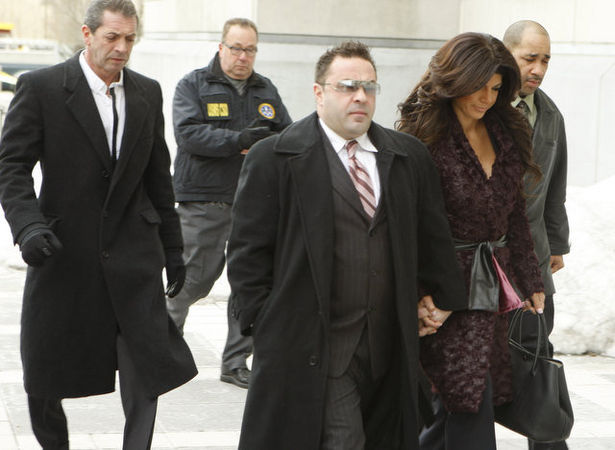
Stars of Real Housewives of New Jersey Bankruptcy Fraud

real housewives bankruptcy fraudReal Housewives of New Jersey Bankruptcy Fraud admitted to by Teresa and Giuseppe “Joe” Giudice, the married stars of Bravo’s hit TV show “The Real Housewives of New Jersey.” They both plead guilty in federal court in Newark to several mortgage and bankruptcy fraud charges against them.

This can happen to you just like it can happen to them.  Their fraud started when they falsified documents to get some five million dollars in construction home loans and other loans.  Later, when they couldn’t pay back the loans, they lied about their income.

Prison time will more than likely be in the couple’s future.  Possible 34 to 46 months. In addition, they will have to pay a yet-to-be-determined sum to the court.  As of now, the sum of $200,000 must be paid by Joe Giudice before his July 8 sentencing hearing.

This is a perfect example of why one must be perfectly honest with the court when filing for bankruptcy.  Bankruptyc fraud is a serious offense that can be avoided.  Bankruptcy is readily available to us all and, with careful planning, even the most unfavorable circumstances can be overcome enabling and otherwise unqualified person to qualify.

First, be honest with your lawyer so he or she can help overcome a set of circumstances that may prevent qualifying for chapter 7 without committing bankruptcy fraud.

Bankruptcy fraud is serious and can be prevented


Read more: nj.com

Filed Under: Bankruptcy as an Option, Bankruptcy FAQ Tagged With: Bankrupt Celebrities, bankruptcy fraud

« Previous Page
Next Page »

Primary Sidebar

(862) 305-4901

Search This Site

Footer

American Bankruptcy Institute Logo National Association of Consumer Advocates Logo
Avvo - Rate your Lawyer. Get Free Legal Advice.
Designated A Debt Relief Agency Under U.S.C. 528
( see required bankruptcy disclosures )
The materials available at this web site are for informational purposes only and not for the purpose of providing legal advice. You should contact your attorney to obtain advice with respect to any particular issue or problem. Use of and access to this Web site or any of the e-mail links contained within the site do not create an attorney-client relationship between Todd Murphy Law and the user or browser.
Lawyer J Murphy | Featured Attorney Foreclosure
(862) 217 2361